Chalets in the Alps: private, warm and well planned
A house of your own in the snow, a fire in the stove, nobody in the corridor: a chalet promises privacy. Turning that into real comfort takes careful planning.
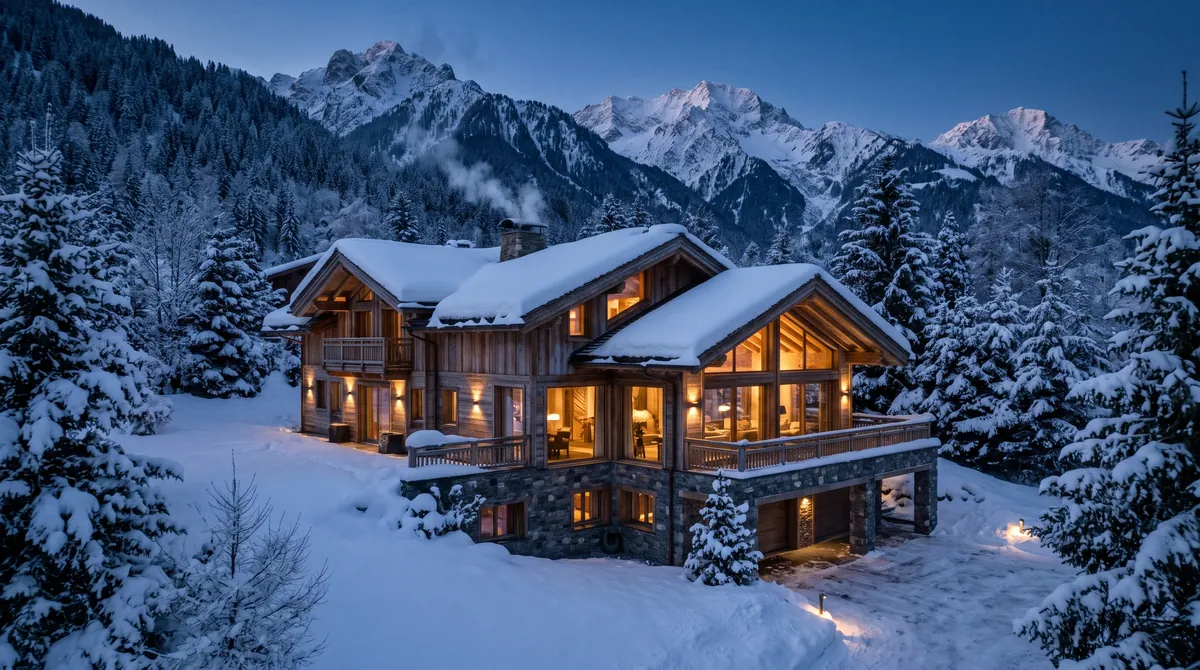

The boot room smells of wet wool and warm wood. The ski boots stand on the dryers with the gloves hanging above them, and through the door to the living room comes the soft crackle of the stove. Outside, the blue hour tints the snow, the peaks glow one last time, and the lamp above the long table is reflected in the big windows. No hotel corridor, no strangers’ voices, just your own house. That is how a chalet feels when it has been well chosen. Getting there takes more than lovely photographs: it takes planning that begins with the group and does not end with clearing the snow.
Three ways to stay in a chalet
Before you compare houses, decide how much looking after you want. More depends on this than on the number of rooms, because the type of service sets the rhythm of every day.
- Catered: a host or chef provides breakfast, afternoon cake and dinner, and often cleaning and transfers too. This is particularly common in the French Alps.
- Self-catered: your own kitchen and complete freedom, but shopping, cooking and clearing up are in your hands.
- Hotel-linked: a chalet in the grounds of a hotel or in a chalet village with a reception, breakfast basket and spa in the main building.
For families with small children and for groups who spend a lot of time on the slopes, a catered chalet is usually the more relaxed choice. If you like to cook yourself and eat at different times, a self-catered house gives you more freedom. The hotel link is a middle way for anyone who wants privacy but does not want to give up breakfast, a spa and a reception.
Layout and group: who sleeps where
A chalet is only as good as its layout. Count bedrooms with their own bathroom, not beds. Check whether the rooms are of equal standard or whether one couple ends up in the little room under the stairs. For several generations separate floors are ideal, and for teenagers a second sitting room where things may get louder in the evening. The dining table must seat everyone, with room for elbows and long conversations. The kitchen should suit the type of service: open and sociable for self-caterers, separate and well equipped if a chef is at work. Storage is often underestimated. Winter gear for a whole group takes up space, and suitcases standing in the hallway rob any house of its calm.
Pay attention to light and orientation, too. A south-facing living room catches the winter sun, which in narrow valleys often clears the ridges for only a few hours. A terrace where you can sit in the sun at midday while the snow sparkles all around is worth more than an extra guest room. Ask when the sun reaches the house in December and January and when it leaves it again.
With chef and host: how catering works well
A catered chalet is only as good as the arrangements made beforehand. Send the team what it needs to know in good time: intolerances, preferences, the children’s ages, preferred mealtimes. Check whether children can eat earlier and separately and whether there is a festive menu on particular evenings. In many catered houses the team has one evening off a week; ask how this is handled and whether a table is booked for you in the village. The wine deserves a word too: is it included, is there a list, or do you bring your own bottles? Good hosts are glad to answer such questions, because they want the week to run without misunderstandings just as much as you do.
Warmth is a matter of planning
New chalets are usually well insulated, with triple-glazed windows and underfloor heating. Older houses of dark, sun-weathered wood have plenty of charm but can be draughty on cold days. Ask how the house is heated and whether the temperature in each bedroom can be set individually. An open fire is glorious if wood is ready to hand and it is clear who lights it and who tends the embers in the evening.
The unassuming rooms are just as important: a heated ski room with boot dryers, a corner for drying gloves and jackets, an entrance where you can knock off the snow without crossing the living room. A private sauna or a hot tub on the terrace is lovely, but it needs time to heat up and someone to look after it. Ask whether that is part of the service or whether you have to remember it yourself.
A chalet is only truly warm when the gloves are dry again the next morning.
Arriving in the snow and the way to the lift
Whether in Tyrol, the Engadine, Savoie or the Dolomites, many chalets sit on a slope, and driveways can be steep and slippery after fresh snow. Ask who clears the driveway and terrace and how early in the morning, whether there is a garage or covered parking, and what equipment is compulsory in winter. The rules on winter tyres and snow chains differ from country to country. In car-free resorts such as Zermatt, Saas-Fee, Wengen or Mürren, the drive ends at the edge of the village or down in the valley, and your luggage continues by electric taxi or train.
When it comes to the way to the lift, precision pays. At best, ski-in, ski-out means that you clip into your skis at the front door and ski right back to it in the evening. Sometimes, though, it means an uphill walk in ski boots or crossing a road. Ask for the route to be described, with direction, gradient and distance. These questions will help you decide:
- How far is it to the nearest lift, and is the way uphill or downhill?
- Is there a shuttle, and when does it run?
- Who clears the snow, and is wood provided for the fire?
- Which services are included daily, and which cost extra?
- Who can be reached if the heating or electricity fails?
The right week
| Period | Snow and light | Demand |
|---|---|---|
| Christmas to New Year | short days, not always snow at lower altitudes | very high, often long minimum stays |
| January | cold, often good snow quality | quieter, good choice |
| February | stable conditions | high, winter school holidays in many countries |
| March to April | long, sunny days, soft snow in the afternoon | moderate, ideal for terraces and families |
| June to September | walking, mountain lakes, cool nights | summer season, often more flexible stays |
A rough guide. The altitude and orientation of the ski area matter more for reliable snow than the calendar.
Altitude is at least as important as the date. A chalet at 1,200 metres may be standing in wet snow in March while conditions higher up are still excellent. Areas with high peaks and lifts reaching well above the treeline offer more certainty, while houses in lower villages offer more village life, bakeries and short distances in the evening. Weigh up what matters more to your group.
Common mistakes
The most common mistake is to fill a house to its maximum number of beds. What is enough for twelve people on paper already feels full with ten. Second, self-catering in a ski week is underestimated: when you come off the slopes tired in the evening, you do not want to cook for a large group, and shopping on arrival day in a crowded resort frays the nerves. Third, many people plan to arrive on a Saturday without thinking of the changeover days, when the roads into many valleys are jammed. Shifting by one day can save hours. And finally, if you book for the summer, ask about balconies, garden furniture and walking trails from the door, because some chalets are entirely geared to winter and feel dark and cramped without snow.
What our selection is based on
A layout for the group
We look for bedrooms of equal standard with their own bathrooms and for shared rooms with space for everyone.
Warmth down to the detail
In winter, heating, insulation, a ski room and drying facilities matter more for comfort than the furnishings.
Winter access
The driveway, snow clearing and the actual way to the lift must be clearly described and work in practice.
Clear services
What is included each day and who helps in an emergency should be set down in writing before you book.
Questions and answers
Is a chalet worthwhile for two people?
Yes, there are small chalets and chalet apartments designed for couples. Make sure the service and facilities suit the size, and ask about houses in chalet villages with breakfast and a spa.
What does ski-in, ski-out really mean?
At best, you ski right up to the door and set off from there too. The term is used in different ways, however. Ask for the exact route to the piste and back to be described.
How early should I book for Christmas or February?
For these weeks many groups start in the spring or summer before. Sought-after catered houses are taken early, while in January and March there is often still a choice at short notice.
Can you rent a chalet in summer too?
Many chalets are available all year round. In summer other things count: the terrace, the garden, walking trails from the door and whether the mountain railways are running.
Go deeper in our network
- resortrisResorts of the world
If you would like to combine privacy with hotel service, Resorts of the world offers further ideas for stays in the mountains.
- suruyaWellness, spa and retreats
The magazine for wellness, spa and retreats shows how a ski holiday can be rounded off with warmth, sauna and calm.
Finest.Lifestyle selects by its own criteria. The images are AI generated illustrations and do not show specific houses or products.


